
By Opuk:
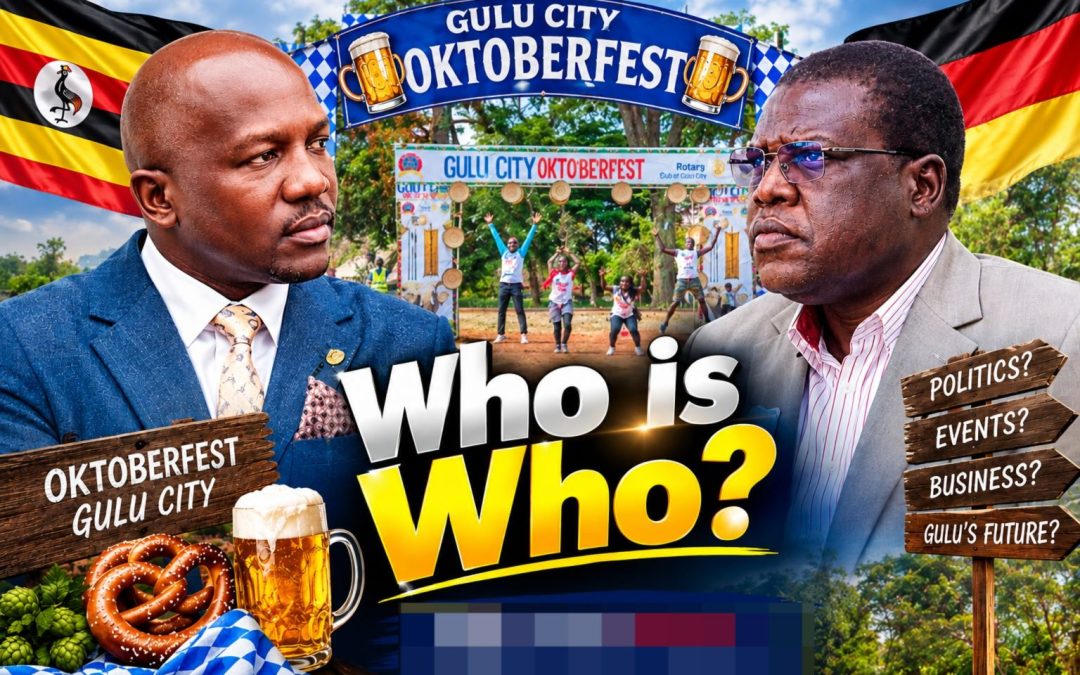
GULU CITY: What began as a celebration of culture, creativity, tourism and global friendship has now placed Gulu City at the centre of a difficult public conversation:
How does the city determine which events can take place, and are the same standards applied to everyone?
The controversy surrounding the 2026 Gulu City Oktoberfest is therefore becoming bigger than whether people will gather at Kaunda Grounds in October or not.
It is increasingly raising questions about transparency, public spaces, administration and the environment Gulu City is creating for businesses, investors, cultural organizers and international partnerships.
As clearance concerns grow, the debate becomes bigger than one festival
The 2026 Oktoberfest was announced to run from October 3 to 12 at Kaunda Grounds, building on the first edition held in 2025.
The 2026 edition was launched during the tenure of then-Mayor Alfred Okwonga, with ambitions of positioning Gulu as a destination for culture, creativity, tourism and business. However, the festival’s future has now become uncertain amid concerns surrounding clearance, security, public health and other regulatory requirements.
Nobody is suggesting that security, public health or regulatory requirements should be ignored. A major event expected to attract large numbers of people must meet the necessary standards. But as questions over the festival’s clearance grow, another question is naturally emerging among members of the public:
Why now?
Gulu residents are also watching how other large gatherings are handled.
Kaunda Grounds has previously hosted major political, Home-welcoming, religious, cultural and community gatherings involving significant crowds.
That naturally raises a straightforward question:
What particular concerns make this event different?
The answer, if clearly communicated by the authorities, could help settle much of the speculation surrounding the festival.
The political shadow without the political accusation
There is also an unavoidable political background to the story.
The Oktoberfest concept became publicly associated with the administration of former Mayor Alfred Okwonga, who was visibly involved in the launch of the 2026 edition before leaving office.
Gulu City now has a new administration under Mayor Acire Labeja George, popularly known as Gunya.
That transition has inevitably added another layer to the public conversation.
However, it would be premature to conclude that the current uncertainty is politically motivated.
The city authorities have a responsibility to enforce regulations, regardless of who initiated an event.
At the same time, the organizers and the public have a right to understand what requirements remain outstanding, why they matter and what must be done for the event to proceed.
The Mayor says Oktoberfest has not been canceled
On September 14, 2026, Mayor Gunya addressed the press and the Fourth Estate regarding the concerns surrounding the festival. according to the Mayor, the city’s technical team will invite the organizers to respond to questions and concerns surrounding the 2026 Oktoberfest, that clarification is important. It suggests that the event has not been formally canceled, but its ability to proceed will depend on how the outstanding concerns are addressed.
For organizers, therefore, the immediate challenge is not simply winning public support. It is demonstrating that every required clearance, safety measure and regulatory obligation has been properly addressed.
For the city authorities, the challenge is equally important: communicating the process clearly enough to prevent the public from interpreting regulatory action as political action.
More than a festival: what is at stake for Gulu?
The Oktoberfest was not introduced simply as another entertainment event.
It was presented as an opportunity to connect German friends and partners with Gulu City, while opening conversations around culture, tourism, business and international opportunities. During the 2025 Oktoberfest, a German guest Member of Parliament reportedly spoke about opportunities for Ugandans, particularly people from Gulu and Northern Uganda, to build stronger connections with Germany.
That raises another important question.
If the 2026 edition does not go ahead, what happens to the relationships, partnerships and international connections that have been developed around the event?
Would cancellation simply mean the end of a festival, or could it also weaken a relationship that the previous Gulu City administration has been trying to build with international partners?
The answer does not have to be one or the other.
Gulu can maintain its regulatory standards while still protecting and encouraging international cultural and business relationships.
Gulu needs both regulation and openness
There is a bigger lesson here for Gulu City.
A growing city needs regulation. It needs proper planning, security, public health standards, environmental safeguards and responsible use of public spaces.
But it also needs an environment where businesses, investors, cultural organizations and event promoters feel confident bringing ideas to the city.
When organizers are uncertain about whether an event can proceed, the consequences can go beyond one canceled or delayed program.
Hotels, restaurants, transport operators, vendors, performers, security companies, suppliers and other businesses can all be affected.
That is why the Oktoberfest debate should not be reduced to “Oktoberfest versus Gulu City.”
The bigger question is:
What kind of city does Gulu City want to become?
A city that welcomes major cultural and international events, but regulates them properly?
A city that protects public spaces while creating predictable procedures for organizers?
Or a city where organizers remain uncertain about what standards they must meet until the last minute?
The question Gulu cannot avoid
Oktoberfest may eventually proceed?, It may be postponed?, Or it may not take place at all?. Whatever happens, the controversy has already created a much bigger conversation about Gulu’s public spaces, political transitions, regulatory consistency and business climate.
The city has an opportunity to demonstrate that a change in leadership does not mean a change in fairness, predictability or openness to legitimate business and cultural initiatives.
And the organizers have an opportunity to demonstrate that international events can be delivered responsibly and in full compliance with city requirements.
Ultimately, this should not be about who started Oktoberfest or which political administration receives credit for it.
It should be about whether Gulu can build institutions and systems strong enough to allow good ideas to survive beyond individual leaders.
Because if a festival designed to connect Gulu with Germany and the wider world becomes a casualty of political transition or unclear procedures, the loss could be bigger than Oktoberfest itself.
The real question is no longer simply whether Gulu will host Oktoberfest.
The real question is: What message does Gulu want to send to the world about doing business, building partnerships and creating opportunities in the city?